The $14,000 gas line that should have cost $3,000
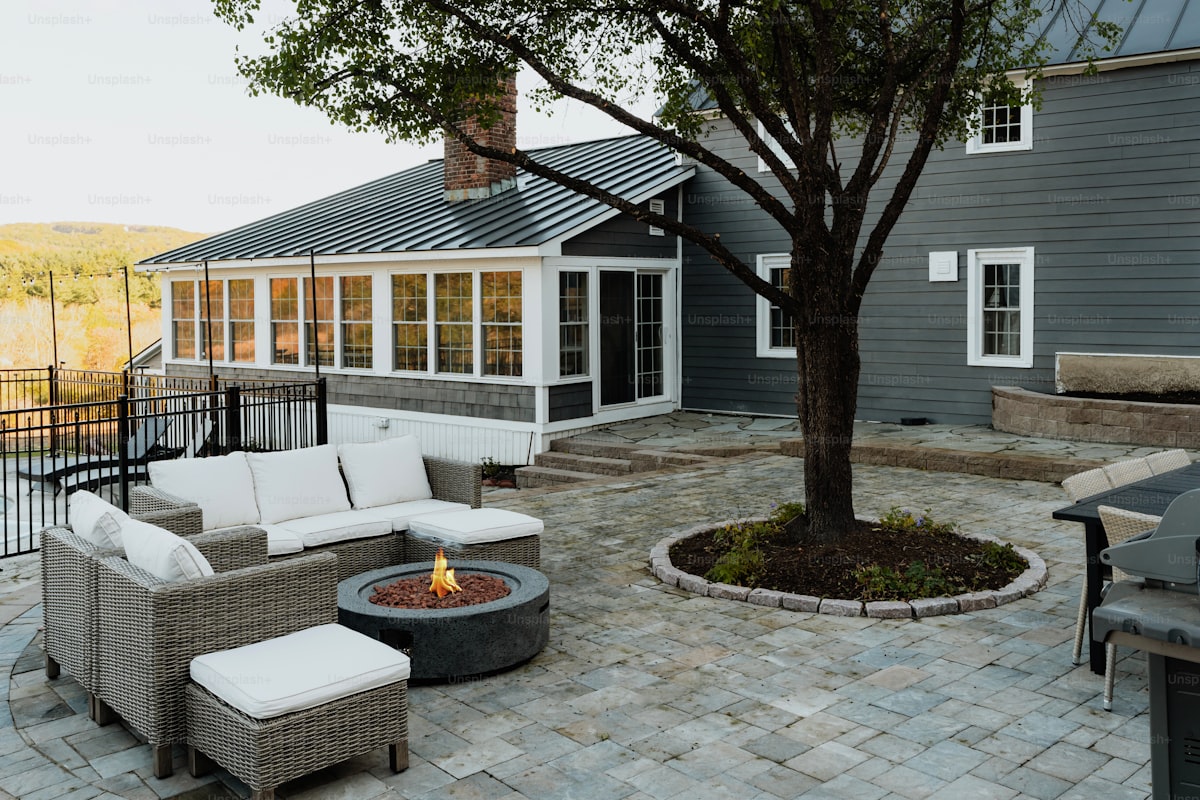
A family in Scottsdale wanted a fire pit lounge next to their pool for evening gatherings. Not a complex ask — a 42-inch round burner, natural gas, recessed into a low stone wall with seating for eight. Their builder quoted gas line routing at $14,000. The line would run from the meter on the west side of the house, under the existing pool deck, around the equipment pad, and out to the fire pit on the east side of the yard. Roughly 80 feet of buried copper tubing, two shut-off valves, and a concrete saw cut through cured deck.
I reviewed the plans as part of a design consultation. The gas meter had a secondary tap on the east side of the house — 40 feet from the fire pit location, with a clear path through landscaping that required zero saw cuts and zero deck penetrations. Same BTU output. Same burner. Same ambiance. The revised route cost $3,000 installed.
That family saved $11,000 because someone looked at the site plan with fresh eyes. The builder proposed the route he knew — the one from the meter tap he had used on three previous projects at that address's orientation. He never walked around to the east elevation.
Eleven thousand dollars. Same fire pit. Same flames. Same Saturday nights with friends. Just 40 fewer feet of buried copper tubing.
Pool-and-fire-pit combinations are where the largest unnecessary costs hide — not in the fire pit itself, but in the infrastructure that connects it. Gas routing, electrical, hardscape transitions, and code-compliant setbacks all carry costs that vary wildly depending on who draws the plans and whether anyone questions the first draft.
Why fire pit plus pool is the most requested backyard combination
Fire and water together hit something primal. But the demand is not just aesthetic — it is functional and financial.
The Pool and Hot Tub Alliance's 2024 Outdoor Living Report found that 67% of new pool projects now include at least one fire feature in the initial design scope — up from 41% in 2019. The trend stuck because fire features solve a real problem: they extend the usable season of a pool area by two to three months in most climates.
Houzz's annual outdoor living survey confirms the pattern — fire pits consistently rank as the number one desired outdoor feature among homeowners planning renovations. Among pool owners I've worked with, the regret is near-universal: they wish they'd included a fire feature in the original build.
The National Association of Realtors' 2024 Remodeling Impact Report puts an ROI number on it: outdoor fire features recover 56% to 78% of their cost at resale, with the highest returns in Sun Belt markets where the fire pit gets year-round use. Pools with integrated fire features sell 12 to 18 days faster than pools without them, according to the same study.
The numbers explain why builders push fire features. But there is a difference between a fire feature that is designed into a backyard and one that is bolted onto it.
Three layout archetypes for pool and fire pit combinations
Every pool-and-fire-pit layout is a variation of one of three archetypes. Each has distinct cost drivers, design constraints, and maintenance implications. Choosing the wrong one for your yard is a mistake you will live with for decades.
Raised fire pit on pool deck
The most common approach. A fire pit — usually gas, sometimes wood-burning — built into a raised stone or concrete structure on the pool deck, typically 18 to 24 inches above deck level. Surrounding seating is either built-in (seat walls) or freestanding furniture.
Best for: Yards where the pool deck has ample room (500+ square feet beyond the pool coping), flat grade, and direct line-of-sight to the pool. Works especially well when the fire pit doubles as a visual focal point from inside the house.
Typical cost: $8,000 to $18,000 for the fire pit structure, gas line, and ignition system. According to HomeAdvisor's 2024 fire pit cost data, the national average for a custom gas fire pit with hardscape surround is $6,500 to $12,000 — but that does not include the gas line run, which adds $1,500 to $6,000+ depending on distance from the meter.
Watch out for: Deck load. A stone fire pit, seat walls, and eight seated adults impose 3,000 to 5,000 pounds of concentrated load — and most standard 4-inch concrete decks were not engineered for it. The fire pit pad may need an independent footing, poured before the deck, not after.
Sunken fire pit conversation area
A fire pit set below grade in a recessed seating area, typically 12 to 18 inches below the surrounding deck level. The sunken design creates a natural sense of enclosure and intimacy. The pool is visible over the seat wall rim, but the fire area feels like its own room.
Best for: Properties with natural grade changes where cutting into a slope is cheaper than building up. Also excellent for wind management — the recessed walls block wind that would otherwise disrupt flames and reduce heat output. In high-wind markets like parts of Arizona, West Texas, and coastal Florida, a sunken pit can function without a wind guard that a raised pit would require.
Typical cost: $15,000 to $30,000. The excavation and retaining structure add $5,000 to $12,000 over a raised pit. According to the NAHB's 2024 residential construction cost data, retaining wall construction averages $40 to $85 per linear foot depending on material and height — and a sunken fire pit needs 30 to 50 linear feet of wall.
Watch out for: Drainage. A recessed area is a bathtub that collects rainwater, splash-out, and deck runoff. Without a central drain connected to a dry well or storm water line, the pit floods after every rain. I have seen sunken pits unusable for days after a single thunderstorm because the drain line was too narrow or routed with insufficient slope. Budget $2,000 to $4,000 for drainage engineering on any sunken design.
Fire bowls integrated into pool edge
Fire bowls or fire-and-water bowls mounted on pedestals or columns at the pool's edge, often on raised bond beam walls or spillway features. The fire sits at or above water level, creating reflections on the pool surface. This is the most dramatic visual option and the most architecturally integrated.
Best for: Pools designed from scratch where the fire feature is part of the original pool shell and hardscape plan. Retrofitting fire bowls onto an existing pool is possible but significantly more expensive because it requires modifying the bond beam, rerouting plumbing, and often rebuilding sections of coping and tile.
Typical cost: $4,000 to $15,000 per pair of bowls, including gas line, mounting structure, and ignition. A pair of 30-inch copper fire bowls on concrete pedestals with electronic ignition runs $8,000 to $12,000 installed, based on HomeAdvisor pricing data. Add $3,000 to $6,000 if the bowls include water spillway features that tie into the pool's circulation system.
Watch out for: Heat damage to coping. Fire bowls within 24 inches of stone or concrete coping create radiant heat cycling that accelerates spalling and cracking. Travertine is especially vulnerable. I recommend a minimum 12-inch non-combustible buffer (steel or stainless-clad concrete) between any flame source and natural stone. Your builder may not mention this — the damage takes two to four years to appear.
Setback codes and safety: what the fire code actually requires
Fire setback codes are local, confusing, and not optional. A fire pit that violates setback requirements can mean fines, forced removal, or voided homeowner's insurance on fire damage claims. Builders should know these codes. Some do not, particularly outside their usual jurisdictions.
The National Fire Protection Association (NFPA) 1 Fire Code provides the baseline that most jurisdictions adopt or modify. Key requirements for residential outdoor fire features:
Planning a pool? Get independent guidance.
Our independent advisors help homeowners make confident, informed decisions about their pool investment.
Explore Our Services →- 10-foot minimum clearance from any structure, property line, or combustible material — this is the NFPA default, but many municipalities increase it to 15 or even 25 feet
- Pool shell setback: No national standard exists specifically for fire-to-pool-shell distance, but most jurisdictions require a minimum of 10 feet from the fire source to the pool water's edge. Some California and Florida jurisdictions require 15 feet.
- Overhead clearance: 21 feet minimum to any combustible overhead structure (pergolas with wood beams, fabric shade sails, tree canopy). Non-combustible structures like aluminum pergolas reduce the requirement to 10 feet in most codes.
- Gas shut-off valve: Must be accessible and within 6 feet of the appliance. Many builders install the valve behind a seat wall where it requires disassembly to access — a code violation that passes many inspections but fails all emergencies.
State-specific requirements that catch homeowners off guard
Texas: The Texas Department of Insurance defers to local jurisdictions, which means setback requirements vary dramatically by city. Houston requires 15 feet from structures. Austin requires 10 feet. San Antonio requires 15 feet and a permit for any gas fire feature. Dallas allows 10 feet but requires a separate gas permit with inspection. There is no statewide consistency.
Florida: The Florida Fire Prevention Code adopts NFPA 1 with modifications. Most Florida counties require 10 feet from the pool enclosure screen (not just the pool shell), which effectively pushes fire pits further from the pool than homeowners expect. In screen-enclosed pool areas — common throughout Central and South Florida — gas fire features inside the enclosure require a separate mechanical ventilation calculation to prevent carbon monoxide accumulation.
California: CAL FIRE and the California Building Code impose the strictest requirements in the country. In Wildland-Urban Interface (WUI) zones — which cover roughly 37% of California's residential land according to the CAL FIRE Defensible Space program — wood-burning fire pits are prohibited outright. Gas fire features in WUI zones require spark arrestors and 30-foot clearance from combustible vegetation. Even in non-WUI areas, California requires 25 feet from any structure for wood-burning fire pits.
Arizona: Maricopa County (Phoenix, Scottsdale, Mesa) requires a 10-foot setback from structures and property lines for gas fire features. Wood-burning fire pits face seasonal burn restrictions from May through September under the Maricopa County Air Quality Department's no-burn advisories. Some HOAs in Scottsdale prohibit wood-burning fire pits entirely and restrict gas fire pit BTU output to 90,000 BTU or less.
The takeaway: verify your specific jurisdiction's requirements before the design is finalized. "My builder said it was fine" is not a defense if the fire pit violates code.
Materials that perform poolside — and ones that fail
Where fire pit meets pool deck is one of the harshest material environments in residential construction. Radiant heat. Chlorinated splash water. UV exposure. Freeze-thaw cycling. Bare, wet foot traffic. Whatever you choose must survive all of these simultaneously — and still look good doing it.
Natural stone: the gold standard with caveats
Bluestone, limestone, and granite are the top performers for fire pit surrounds adjacent to pools. They handle heat cycling without spalling, resist chlorine staining, and age gracefully. Bluestone in particular stays cooler underfoot than concrete in direct sun — a genuine comfort advantage on pool decks.
The caveat is travertine. I love it on pool decks away from fire features — but within 36 inches of a gas flame, it fails. The stone is porous and calcium-rich. Heat cycling causes microscopic fissures that trap pool water, accelerating spalling through salt crystallization. I have watched travertine caps on fire pit seat walls deteriorate to replacement condition in three seasons.
Natural stone runs $25 to $60 per square foot installed for the fire pit surround area, depending on species and region. According to the NAHB's 2024 cost data, bluestone averages $30 to $45 per square foot in Sun Belt markets and $35 to $55 in the Northeast.
Concrete pavers: reliable and cost-effective
Modern concrete pavers rated for fire pit use (check the manufacturer's heat exposure spec — not all qualify) offer the best value for most budgets. They handle heat cycling well, come in dozens of colors and textures, and cost $12 to $25 per square foot installed. Select pavers with compressive strength above 8,000 PSI to resist heat-induced cracking.
The downside: they fade. After five to seven years of UV exposure, the surface color shifts noticeably. Sealing extends the life but adds $1 to $3 per square foot every two to three years.
Prefab fire pits versus custom-built: the honest comparison
Prefab fire pits — the kind you buy as a kit with a pre-formed burner housing, stone veneer panels, and a gas connection point — range from $2,000 to $6,000 from retailers like RH, Pottery Barn, and specialty outdoor dealers. They install in a day, require minimal site prep, and look good on delivery day.
Custom-built fire pits — designed by a mason or hardscape contractor to match your pool deck materials, with a built-in burner pan, custom gas line, electronic ignition, and integrated seating — run $6,000 to $18,000+. They take one to three weeks to build.
The honest truth: under $12,000, a high-quality prefab on a properly prepared pad is the smarter choice. The gap between a $5,000 prefab and a $12,000 custom build does not translate proportionally to durability, heat output, or visual impact. Above $12,000, custom wins — you can integrate the fire pit structurally into seat walls, planters, and deck transitions in ways a prefab cannot.
Budget tiers: what you actually get at each price point
Every fire feature article gives you ranges without context. Here is what the numbers actually buy, sourced from contractor pricing I review across Texas, Florida, California, and Arizona.
$8,000 to $12,000: prefab fire pit on existing patio
You get a high-quality prefab gas fire pit (36 to 42-inch burner), a gas line run of 25 feet or less from an existing meter tap, electronic ignition, a lava rock or fire glass media fill, and a non-combustible pad if needed. No new hardscape. No seat walls. No lighting beyond what already exists.
This tier works if you have an existing patio or pool deck with room for the pit and freestanding seating. According to HomeAdvisor's 2024 cost data, the national average for a gas fire pit installation with a short gas line run is $7,800. Add 10% to 20% in high-cost markets (California, South Florida).
$15,000 to $25,000: custom built-in with matching hardscape
This is where most pool-and-fire-pit projects land. You get a custom-built fire pit in stone or concrete veneer that matches your pool coping and deck material, a gas line run up to 60 feet, electronic ignition with a wall-mounted or remote control, built-in seat walls (typically 30 to 50 linear feet), and landscape lighting for the fire area (four to eight low-voltage fixtures). The NAHB's residential construction data shows that seat wall construction averages $45 to $75 per linear foot for stone veneer on CMU block, which is the dominant method for poolside fire pit seating.
At this budget, the fire pit area reads as an intentional outdoor room — not an appliance dropped onto a patio. Matching materials tie it to the pool, and built-in seating eliminates the furniture-on-deck look that makes lower-budget installations feel temporary.
$30,000 to $45,000+: integrated into the pool deck design
At this tier, the fire feature is designed as part of the pool and hardscape from the beginning — not added on top. You get fire bowls or a fire pit integrated into the pool deck geometry, seat walls that double as planter walls or grade transitions, a full landscape lighting package (12+ fixtures with zones and dimming), possible water-and-fire combination features, premium natural stone throughout, and a professionally engineered drainage plan for the fire area.
Projects at this level are multi-trade efforts — gas, electric, masonry, plumbing, and landscape contractors all need coordination. In my experience, change orders of 15% to 20% are the norm, meaning a $40,000 integration commonly lands at $46,000 to $48,000. The PHTA's industry research tracks similar patterns. The primary driver: unforeseen subsurface conditions (rock, roots, utilities) that the original bid did not account for.
Equipment traps: where builders pad fire feature costs
Most builders are honest tradespeople solving the problem in front of them. But they profit from the spec, not from trimming it. Here are three areas where fire feature specifications routinely exceed what the project requires.
Oversized burner pans
A 36-inch round burner pan produces a visually impressive flame ring at 75,000 to 90,000 BTU — more than enough to warm a 10-foot seating radius on a 50-degree evening. Yet builders routinely specify 48-inch and even 60-inch pans. A 60-inch costs $2,500 to $4,000 more and requires a larger gas line, a higher-output regulator, and more media fill. The visual difference from six feet away is modest. The cost difference is not.
Ask your builder to justify anything larger than 42 inches. If the answer is "it looks better," ask to see both running side by side.
Unnecessary automation
Electronic ignition is standard and worth the cost. But some builders push fully automated systems — smartphone apps, wind sensors, rain sensors, timer programming — adding $2,000 to $5,000. A simple electronic ignition with a manual switch or basic remote does everything a residential fire pit needs. The automation components are the first to fail and the most expensive to repair — a wind sensor replacement alone runs $400 to $800 with the service call.
Premium gas valves presented as required
Standard brass ball valves cost $15 to $30 and last decades. Some builders spec "premium" valves at $150 to $300 each and include two or three. For a residential single-burner fire pit, one ball valve and the ignition module's built-in safety valve are sufficient. Everything else is margin dressed up as redundancy.
What an independent design review catches
The Scottsdale gas line story is not unusual. In my experience, the gas routing is suboptimal in roughly four out of ten fire feature plans — longer than necessary, routed through harder materials, or spec'd at a larger diameter than the BTU load requires. Each error adds cost.
But gas routing is only one piece. A fire feature review catches issues builders miss or do not prioritize:
- Setback violations — the fire pit is drawn 8 feet from the property line in a jurisdiction that requires 10. Caught on paper, it is a line change. Caught after construction, it is a demolition.
- Material conflicts — travertine specified for a fire pit cap where heat cycling will destroy it in three seasons. Swap to bluestone or granite before the stone is ordered and you save the cost of replacement plus labor.
- Drainage oversights on sunken designs — no drain, undersized drain, or drain routed to a location that violates the lot's stormwater plan. This is the number one failure point on sunken fire pit installations.
- Scope padding — a 60-inch burner pan where 42 inches delivers the same experience, three gas valves where one suffices, automation systems that solve no real problem.
- Missing coordination — the gas contractor and the mason are scheduled for the same day but nobody told the electrician, so the low-voltage lighting conduit does not get laid under the seat wall footing and has to be surface-mounted later.
At AquaSteer Advisors, this is exactly what our Advocate tier's 12-Point Design Integrity Review covers. We look at the full backyard plan — pool, fire features, hardscape, lighting, drainage, utilities — and identify conflicts, inefficiencies, and code issues before construction starts. The fire feature review is one component of that broader assessment. For projects where the fire feature is the primary scope, our Navigator tier provides the same design review at a lower price point.
A second set of eyes on your fire feature spec is about catching the routing inefficiency, the material mismatch, or the code conflict that saves you thousands — the way it did for that family in Scottsdale.
If you are planning a patio that will anchor your fire pit area, getting the hardscape layout right from the start prevents expensive rework when fire features, pools, and patios are designed independently. And if you want to avoid the broader design mistakes that cost pool owners the most, understanding how fire features interact with pool geometry is part of that picture.
Get independent guidance for your backyard project
AquaSteer Advisors is an independent pool and backyard construction consulting firm. Our CPO-certified advisors have no builder affiliations, no manufacturer partnerships, and no referral commissions. We work for you and only you.
For a fraction of your total build cost — typically 1% to 5% — our advisors help you avoid the costly mistakes that most homeowners only discover after it is too late.
Talk to an independent design advisor
Book a free 15-minute discovery call. No obligation. No sales pitch. Just honest guidance from someone who has been in your shoes.
Call toll-free: +1 (888) 250-5641 | Email: hello@aquasteer.com
Book a Consultation →