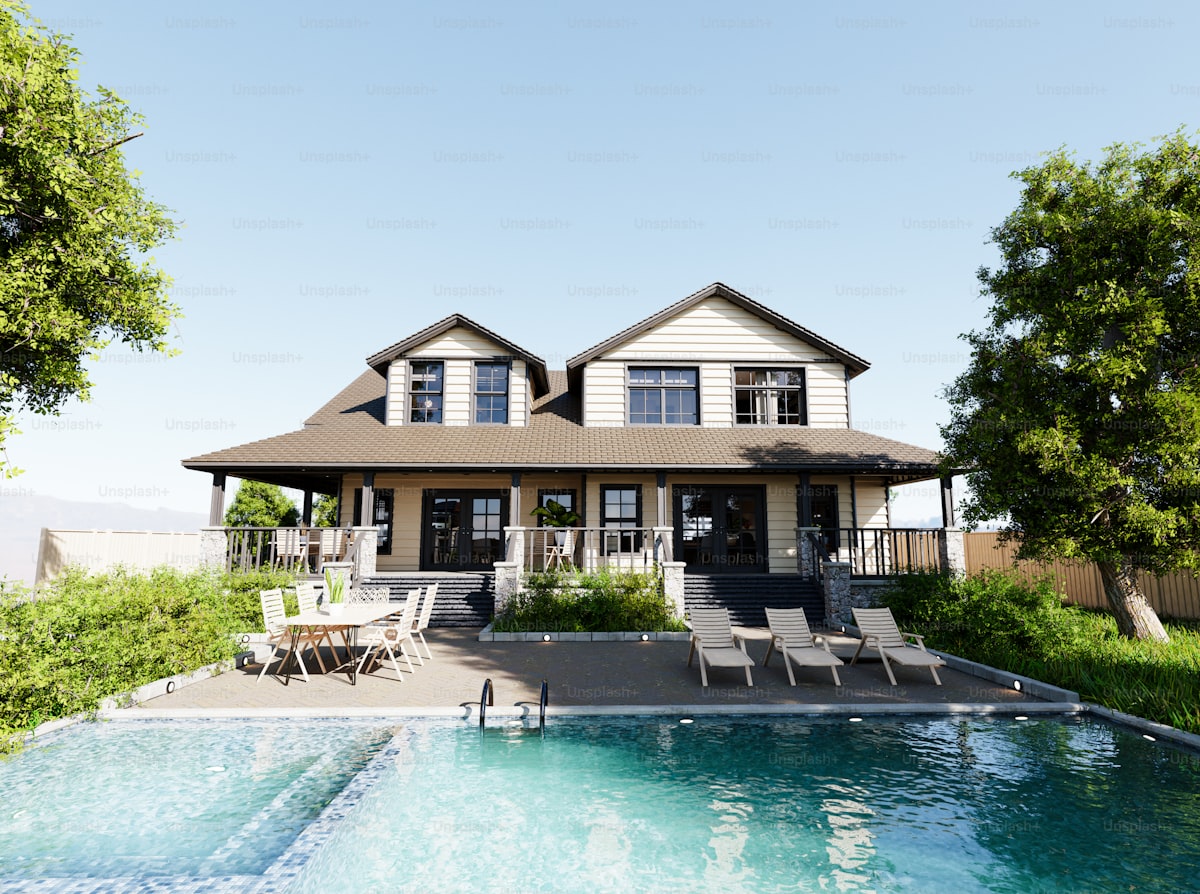
The $85,000 patio that left no room for the pool
Rachel and Tom bought their Westlake Village home for the backyard. Quarter acre, flat grade, mature olive trees along the south fence. They wanted a simple patio for weekend grilling — maybe 400 square feet of stamped concrete, a built-in gas line, and some string lights.
Their contractor had bigger ideas. He produced a 3D render with a covered pavilion, an L-shaped grill island with granite countertops, and stamped concrete extending from the back door to the property line. Stunning. Also $85,000 more than they had budgeted.
They said yes. The render was irresistible.
Three months into construction, their eight-year-old daughter asked for a pool. Rachel and Tom looked at each other and realized they wanted one too — had always wanted one, just not yet. But the patio layout consumed the entire usable footprint. Adding a pool now meant demolishing roughly $40,000 of freshly poured concrete, rerouting the gas line, and relocating the grill island. The contractor quoted $67,000 for the demolition and rebuild alone, before a single shovel touched pool dirt.
A $2,000 design review before the first pour would have mapped the entire backyard vision — patio now, pool in Phase 2. The layout would have reserved the space. The gas line would have run a different direction. They would have saved $40,000 and two months of construction disruption.
Rachel and Tom's story isn't unusual. The Pool and Hot Tub Alliance reports 38% of homeowners who build premium patios add a pool or spa within three years. The ones who planned for it from day one spend tens of thousands less than those who retrofit. That gap is the cost of designing a patio in isolation instead of designing a backyard.
Fifteen years of designing outdoor living spaces taught me what actually matters: the trends worth following, the material trade-offs nobody mentions, and the exact dollar threshold where a patio project becomes a full construction project demanding professional oversight.
2026 patio design trends that are actually worth your money
Trends cycle fast. Stamped concrete herringbone was everywhere in 2019. By 2022, everyone wanted wood-look porcelain. Half of those age poorly. Four trends have real staying power — because they solve functional problems, not just aesthetic ones.
Natural stone is back — but not the way you remember it
Travertine and flagstone dominated outdoor design in the early 2000s, then fell out of favor as manufactured pavers got cheaper and more consistent. Now natural stone is surging — but the fabrication has caught up. Calibrated natural stone, machine-cut to uniform thickness with consistent edge profiles, installs as cleanly as manufactured pavers while retaining the organic variation that makes stone beautiful.
Houzz and NAHB surveys show natural stone gaining market share, with travertine and bluestone leading. The appeal is simple: natural stone doesn't look dated after ten years the way stamped concrete patterns do.
The indoor-outdoor living room
The patio-as-a-room concept has been trending for a decade, but 2026 is the year it becomes the default expectation above $30,000. Defined zones — cooking, dining, lounging, fire — with dedicated flooring transitions, overhead structure, and integrated lighting that makes the space usable after dark year-round.
This isn't about throwing a sectional on a concrete slab. The NAHB's 2025 What Home Buyers Want survey found 73% of buyers ranked a finished outdoor living area as desirable or essential. Builders who treat the patio as an afterthought are building homes that sell slower.
Covered structures are no longer optional at the premium tier
A pergola used to be the upgrade. Now it is the baseline. Above $40,000, clients expect a solid-roof pavilion, a louvered pergola with motorized blades, or a full roof extension. The reason is practical: covered space is usable space, rain or shine, and it protects the furniture investment premium patios demand.
Louvered roof systems like StruXure run $60 to $100 per square foot installed, per HomeAdvisor. A 200-square-foot louvered cover adds $12,000 to $20,000. That single addition changes how often clients actually use their patio more than any other upgrade I design.
Large-format porcelain pavers
The biggest material shift in outdoor hardscaping: large-format porcelain pavers — 24x24 and 24x48 inch tiles rated for exterior use. These aren't the brittle ceramic tiles that cracked on your parents' patio in 2005. Modern 20mm porcelain pavers are frost-proof, UV-stable, virtually zero-maintenance, and available in convincing stone, wood, and concrete finishes.
The trade-off is cost. At $20 to $40 per square foot installed, porcelain runs 30% to 60% more than concrete pavers. But it doesn't fade, doesn't need sealing, doesn't grow mold in the joints, and doesn't shift over time. For homeowners who want a patio that looks the same in year ten as it did on day one, porcelain is the material to beat.
The material showdown: cost, durability, and the things your contractor won't mention
Every material has a sales pitch. Every sales pitch leaves something out.
Travertine: $15 to $30 per square foot installed
Travertine is gorgeous, stays cool underfoot, and develops a patina that many homeowners love. It is also porous. Without annual sealing — which most homeowners skip after year two — travertine absorbs stains, algae, and moisture that accelerates freeze-thaw damage in cold climates. Below USDA Hardiness Zone 6, I don't specify unfilled travertine for pool decks or high-traffic patios. Filled and honed performs better, but it still needs resealing every 18 to 24 months.
Best for: Sun Belt climates, pool surrounds where cool surface temperature matters, homeowners who will commit to sealing maintenance.
Interlocking concrete pavers: $12 to $25 per square foot installed
The workhorse of the industry. Interlocking pavers offer the best combination of durability, repairability, and cost. A cracked paver gets pulled and replaced — try that with poured concrete. The Interlocking Concrete Pavement Institute rates properly installed pavers at 8,000+ PSI compressive strength, exceeding poured concrete by 2x to 3x.
The downside: joint sand migration. Polymeric sand helps but degrades under heavy rain and power washing. Budget $300 to $600 every two to three years for joint sand restoration on a 500-square-foot patio. Pavers can also shift and settle if the base preparation is inadequate — and base preparation is where contractors cut corners most often.
Best for: Any climate, DIY-friendly repairs, budget-conscious projects that still want a premium look.
Stamped concrete: $8 to $18 per square foot installed
The most cost-effective way to cover a large area with a decorative surface. Stamped concrete mimics stone, brick, or tile at a fraction of the material cost. But contractors rarely mention this: stamped concrete cracks. Not if. When. Concrete is rigid, expands and contracts with temperature, and control joints only direct where cracks form — they don't prevent them. Expect cracks within three to seven years in most climates.
The Portland Cement Association notes that hairline cracking in exterior concrete is expected and doesn't indicate structural failure. True — but hairline cracks in stamped concrete disrupt the pattern and are nearly impossible to repair invisibly. Recoloring and resealing every two to three years costs $1.50 to $3.00 per square foot — a 600-square-foot patio runs $900 to $1,800 per cycle.
Best for: Large-area coverage on a budget, homeowners comfortable with maintenance cycles, projects where the patio is secondary to other backyard features.
Planning a pool? Get independent guidance.
Our independent advisors help homeowners make confident, informed decisions about their pool investment.
Explore Our Services →Large-format porcelain pavers: $20 to $40 per square foot installed
The premium choice for zero ongoing maintenance. Porcelain rated for exterior use (look for ISO 10545 certification and minimum 20mm thickness) resists frost, stains, fading, and mold. The surface is virtually impervious — a pressure washer and water is all you need.
The catch is installation. Porcelain pavers require a perfectly level base — typically compacted gravel with a sand or morite setting bed — and the installer needs experience with large-format tiles. Poor installation leads to lippage (uneven edges) that creates trip hazards. Insist on an installer with at least ten exterior porcelain projects. This isn't a material for your brother-in-law who "does concrete on the side."
Best for: Modern aesthetics, low-maintenance priorities, climates with freeze-thaw cycles, homeowners willing to invest upfront for lower lifetime cost.
Natural flagstone: $15 to $35 per square foot installed
Flagstone — typically Pennsylvania bluestone, Arizona sandstone, or Tennessee fieldstone — delivers a natural, organic look that manufactured products can't replicate. Each piece is unique. The variation is the point.
The variation is also the challenge. Flagstone requires skilled installation to achieve level surfaces and consistent joint widths. Irregular shapes mean more cutting waste — budget 15% to 20% overage on material. And thickness variation across pieces means more mortar or setting material to level the surface, which adds labor cost. In wet climates, flagstone joints grow moss and weeds aggressively unless mortared, which eliminates the flexibility advantage of dry-set stone.
Best for: Organic, naturalistic designs, rustic or transitional architecture, areas where the patio blends into landscape rather than standing as a geometric structure.
Layout patterns: designing for the yard you actually have
Square footage dictates strategy. A design that works on a 6,000-square-foot lot is irrelevant on a 2,000-square-foot one.
Small yards: under 2,000 square feet of usable outdoor space
Constraint forces creativity. The biggest mistake: replicating a large-yard layout in miniature — a tiny dining area, a tiny fire pit, a tiny lounge, all too cramped to use. Pick two functions and commit. A 12x14 dining zone with built-in bench against the fence plus a 10x10 lounge with fire feature gives you 288 square feet of patio that works. No freestanding furniture eating floor space — use built-ins. No round fire pits — linear fire tables tuck against walls and double as side tables. No lawn remnants under 200 square feet — they look patchy and cost more to maintain than they're worth.
Medium yards: 2,000 to 5,000 square feet
The sweet spot. Enough room for three to four distinct zones without feeling forced. The critical decision at this scale: the relationship between patio and potential future pool. If a pool is even remotely possible within five years, the layout must account for it now — position the primary patio adjacent to the house with at least 20 feet of clear depth between the patio edge and the rear fence, enough for a pool, minimum 4-foot safety decks, and equipment access.
I design medium yards in an L-shape or U-shape wrapping the house corner. This creates visual separation between zones without walls, maximizes the usable footprint, and leaves the yard's center flexible for lawn, pool, or future expansion. One detail people overlook: pre-run electrical conduit from the house panel to the rear property corner. It costs $400 to $800 during patio construction. After the hardscape is in, it costs $2,500 to $5,000.
Large yards: 5,000 square feet and above
Large yards create a different problem: disconnection. When you have space for everything, the risk is building features that don't relate to each other — a patio here, a fire pit there, a pool over there, connected by awkward lawn paths that turn muddy in rain. The solution is a circulation plan. Before choosing materials, I map how people move through the space — where they enter, where they sit, where kids run, where the eye travels. Dedicated walkways in flagstone, pavers, or decomposed granite give the yard structure and prevent the trampled-grass shortcuts that appear within six months.
The patio-to-pool pipeline
A couple builds a premium patio — outdoor kitchen, fire feature, nice furniture. They spend $40,000 to $70,000. Within 18 months, they're calling a pool builder. The patio made them fall in love with their backyard. The Pool and Hot Tub Alliance's market research tracks the same trend industry-wide. The backyard becomes the favorite room in the house. Why wouldn't you add water?
The problem: most patios are designed as standalone projects. The contractor scoped patio. They delivered patio. Nobody asked, "What happens to this layout if you add a 15x30 pool in two years?" The answer, as Rachel and Tom discovered, is often demolition.
If you are spending $30,000 or more on a patio and there is any chance — even a 20% chance — a pool enters the picture within five years, spend the extra $1,500 to $3,000 on a master site plan: pool footprint, equipment pad, utility runs, grading plan. Design the patio so the pool can be added without tearing anything out. Read our full breakdown of pool construction costs in 2026 to understand what Phase 2 actually costs when planned versus retrofitted.
Budget tiers: what you actually get at each price point
Budget conversations in outdoor design are often dishonest. Contractors show you the $80,000 project in their portfolio, then hand you a bid for $35,000. The $35,000 version uses different materials, no covered structure, and "landscaping" that amounts to mulch and boxwoods. What each tier actually delivers in 2026 dollars:
$5,000 to $10,000: The functional foundation
A platform, not a destination. Expect 200 to 350 square feet of stamped concrete or basic pavers, a simple layout, no built-in features, and basic landscape edging. Appropriate for a dedicated grilling zone, a small seating area off the back door, or a transitional step toward a larger project.
Don't let a contractor stretch this budget across a larger footprint by skipping proper base preparation. A 250-square-foot patio done right outlasts a 500-square-foot patio done cheap. The Portland Cement Association specifies a minimum 4-inch compacted gravel base for residential concrete — contractors who skip this save $2 to $3 per square foot and create a patio that cracks within three years.
$15,000 to $30,000: The outdoor room
Where a patio starts to feel like a room. 400 to 700 square feet of quality pavers or natural stone, a gas fire pit or linear fire table, built-in seating, low-voltage landscape lighting, and basic planting. Usable after dark and across three seasons.
This tier is where contractor quality starts to matter enormously. The difference between a $15,000 paver patio and a $30,000 one is rarely the pavers — it's the base preparation, edge restraint, drainage, and installation precision. Two bids for the same 600-square-foot patio can vary by $10,000. Get at least three and ask each contractor to specify their base preparation method in writing.
$40,000 to $75,000: The outdoor living system
Where patios become complex. Multiple material zones (stone dining area transitioning to paver lounge), a built-in outdoor kitchen with plumbed sink and electrical, a substantial fire feature, a permanent overhead structure, professional lighting, and integrated landscaping with irrigation.
Projects at this level involve multiple trades: concrete/masonry, electrical, plumbing, gas, carpentry, landscaping. Coordination between them is the biggest risk. I've reviewed $60,000 patios where the electrician trenched through the landscaper's freshly graded beds because nobody shared a site plan. That rework cost $3,200 and delayed the project two weeks.
$100,000 and above: The backyard transformation
At six figures, you aren't building a patio. You're building an outdoor living environment with the complexity of a small commercial build — full outdoor kitchens with refrigeration, resort-style seating areas, pools, spas, fire and water features, landscape architecture, irrigation, drainage engineering, and often structural modifications to the home itself.
The NAHB classifies projects above $100,000 in the same risk category as major home additions. The failure modes are identical: scope creep, trade coordination failures, permitting complications, change orders. Yet most homeowners manage these projects with the same oversight they'd apply to replacing a deck — which is to say, almost none.
The complexity cliff at $40,000
There is a threshold in outdoor construction nobody warns you about. Below $40,000, a patio is a single-trade job — one contractor, one material, manageable. Above $40,000, it quietly becomes a multi-trade construction project, and the risk profile changes dramatically.
Below the cliff, your biggest risk is cosmetic: a poorly matched paver color, an awkward curve. Above it, your risks are structural, financial, and contractual — gas line routing, electrical load calculations, drainage engineering, permit requirements, overhead structures meeting wind and snow load codes, contractors who bid low and make it up on change orders.
The NAHB's 2024 Cost of Doing Business Study puts the average change order rate on residential outdoor projects exceeding $50,000 at 23% of contract value. On a $60,000 patio, that's $13,800 in unplanned additions. Most trace back to incomplete design documentation — the contractor encounters tree roots, rock, utility lines, or grade changes that nobody surveyed for.
This is where a patio project needs what a pool project needs: independent oversight. Someone who reviews bids before you sign, verifies base preparation specs match site conditions, and ensures trades are coordinated before they show up on the same day and collide.
When your patio project needs independent oversight
If your patio budget is under $25,000 and the scope is a single material on a flat lot with no gas, electrical, or plumbing — you probably don't need a consultant. Get three bids, check references, verify base prep in writing.
If your budget exceeds $40,000, involves multiple trades, includes any future pool consideration, or sits on a lot with drainage challenges — you are in construction project territory. The same oversight that protects a $150,000 pool build protects a $60,000 backyard transformation.
Our Advocate tier was designed for exactly this complexity range. The 12-Point Design Integrity Review catches layout conflicts, drainage oversights, and future-proofing gaps contractors miss — not because they're incompetent, but because their job is to build what you asked for, not to question whether it's the right thing to build.
Our service tiers scale with project complexity. A $2,000 design review on a $60,000 project is 3.3% of the total budget — and clients consistently save multiples of that in avoided change orders and design revisions. See our case studies for real numbers.
Five decisions to make before you call a contractor
Before a single contractor sets foot on your property, answer these five questions.
- What is the five-year vision for the entire backyard? If a pool, hot tub, play structure, or garden is even possible, the patio layout must accommodate it. Designing in isolation is the most expensive mistake in outdoor construction.
- How will you use this space after dark? Lighting transforms a daytime patio into a year-round living space — plan the electrical now, because retrofit costs three to five times more.
- What is your maintenance tolerance? If you won't seal travertine every two years, don't install travertine. The most beautiful patio on installation day is irrelevant if it looks neglected by year three.
- Where does water go when it rains? Walk your yard during a heavy rain — if water flows toward the house or pools where you plan to build, that drainage problem must be engineered into the design, not discovered after the pavers are laid.
- What is the real budget? Take your number and add 20% — for the lighting you forgot, the gas line extension, the drainage solution, and the one material upgrade you won't resist in person. If the inflated number makes you uncomfortable, reduce scope now rather than funding change orders later.
Get independent guidance for your backyard project
AquaSteer Advisors is an independent pool and backyard construction consulting firm. Our CPO-certified advisors have no builder affiliations, no manufacturer partnerships, and no referral commissions. We work for you and only you.
For a fraction of your total build cost — typically 1% to 5% — our advisors help you avoid the costly mistakes that most homeowners only discover after it is too late.
Talk to an independent design advisor
Book a free 15-minute discovery call. No obligation. No sales pitch. Just honest guidance from someone who has been in your shoes.
Call toll-free: +1 (888) 250-5641 | Email: hello@aquasteer.com
Book a Consultation →